Breakfast can be easier when you have a few combinations you enjoy and ingredients you know how to use. You might prefer eggs and toast, a cold yogurt bowl, or a savory meal made from food you already have.
The seven ideas below give you different starting points. Each includes measured ingredients and a transparent protein estimate. Choose portions that suit your appetite, preferences and any nutrition advice you have received.
How to use the protein estimates
The numbers count only the ingredients named in the calculation column. Optional fruit, vegetables, seasonings, cooking fats and a tortilla are excluded. These are approximate protein subtotals, rather than complete nutrition analyses or calorie-controlled meals.
The calculations use specific U.S. product labels and an American Egg Board reference. Label rounding, product changes and different brands affect the result. Brand names identify the reference used; you can choose another product and recalculate from its label. The links below are ordinary source links, without affiliate tracking.
One example: if your yogurt label lists 18 g of protein per 170 g and you use 170 g, count 18 g. If your bread lists 4 g per slice rather than the reference bread's 6 g, use 4 g in your calculation.
Seven breakfast starting points
Every row represents one example serving. The portions illustrate the arithmetic; they are not a daily menu or an individual protein prescription.
| Breakfast idea | Ingredients counted for one example serving | Approximate protein subtotal |
|---|---|---|
| Greek yogurt and oats | 170 g plain nonfat Greek yogurt + 20 g dry rolled oats | 18 + 2.5 = 20.5 g |
| Eggs and whole-grain toast | 2 large eggs + 1 reference slice of bread (45 g) | 12 + 6 = 18 g |
| Cottage cheese and toast | 169.5 g reference cottage cheese + 1 reference slice of bread (45 g) | 19.5 + 6 = 25.5 g |
| Tofu scramble and toast | 170 g reference extra-firm tofu, measured before pressing/cooking + 1 reference slice of bread (45 g) | 18 + 6 = 24 g |
| Yogurt overnight oats | 40 g dry rolled oats + 170 g plain nonfat Greek yogurt + 120 mL reference unsweetened soy beverage | 5 + 18 + 4 = 27 g |
| Egg-and-bean breakfast bowl | 2 large eggs + 130 g reference canned black beans, as packaged | 12 + 7 = 19 g |
| Chicken and rice breakfast bowl | 84 g reference fully cooked chicken strips + 70 g reference ready-cooked brown rice | 21 + 2 = 23 g |
The decimal values show the calculation, not laboratory precision. For cottage cheese, 169.5 g is one-and-a-half of the reference label's 113 g serving; in the kitchen, about 170 g is practical. Do not assume all cottage cheese, tofu, yogurt, bread or cooked chicken has these same values.
1. Greek yogurt with oats and fruit
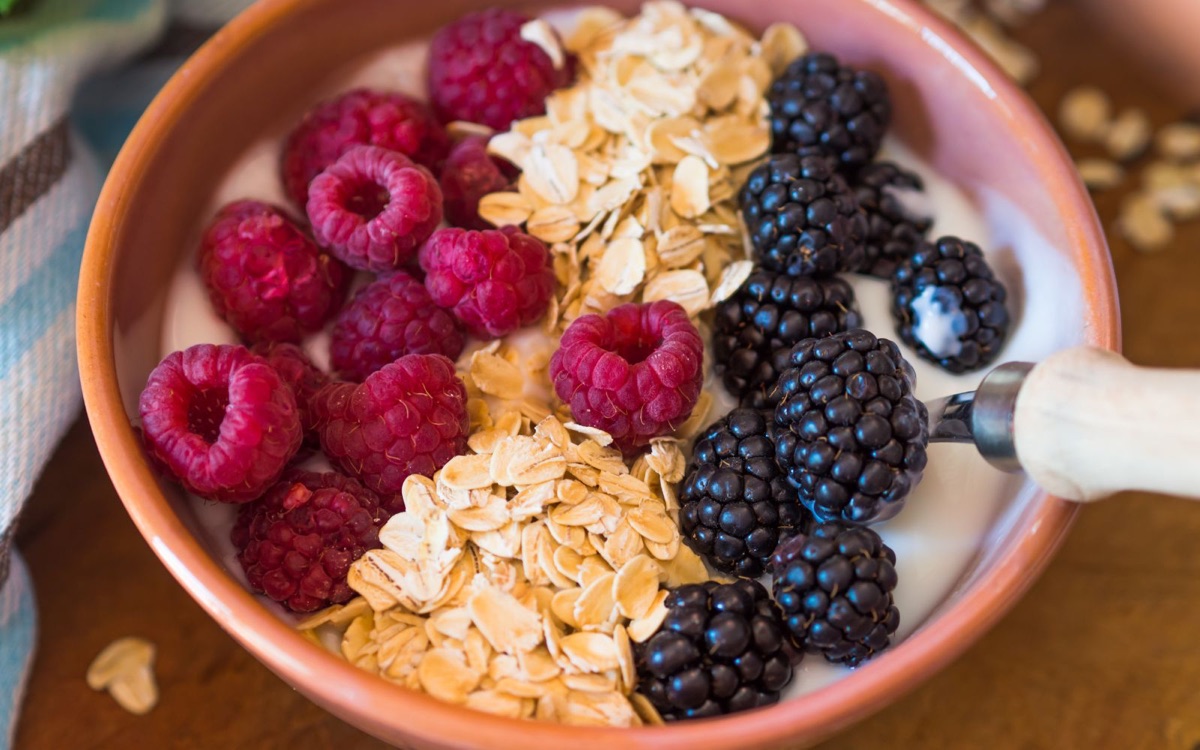
Start with plain Greek yogurt and add oats according to the preparation directions on their package. Add berries or another fruit you enjoy. If you prefer cooked oats, prepare them first and combine them with the yogurt in a way that suits your preferred texture.
This can be a useful choice when you want a breakfast you can assemble from a short grocery list. Changing to a plant-based yogurt changes the protein estimate; check that product's label rather than carrying over the dairy yogurt number.
2. Eggs, toast and tomatoes
Pair two cooked eggs with a slice of whole-grain toast. Add tomatoes or another vegetable if you like. You can change the egg preparation without needing a different breakfast idea each time.
The estimate uses two large eggs at approximately 6 g of protein each, plus the specific bread in the source list. Follow safe egg preparation guidance: cook eggs until the yolk and white are firm. FoodSafety.gov cooking temperatures
3. Cottage cheese with toast and fruit
Serve about 170 g of cottage cheese with toast, adding fruit separately if you enjoy a sweeter breakfast. For a savory version, try your preferred herbs or sliced vegetables.
Compare the serving weights on cottage cheese containers. A single-serve pot and a portion scooped from a larger tub may not have the same weight or protein amount. The calculation here uses the 2% product's 113 g serving, not the manufacturer's different single-serve pot.
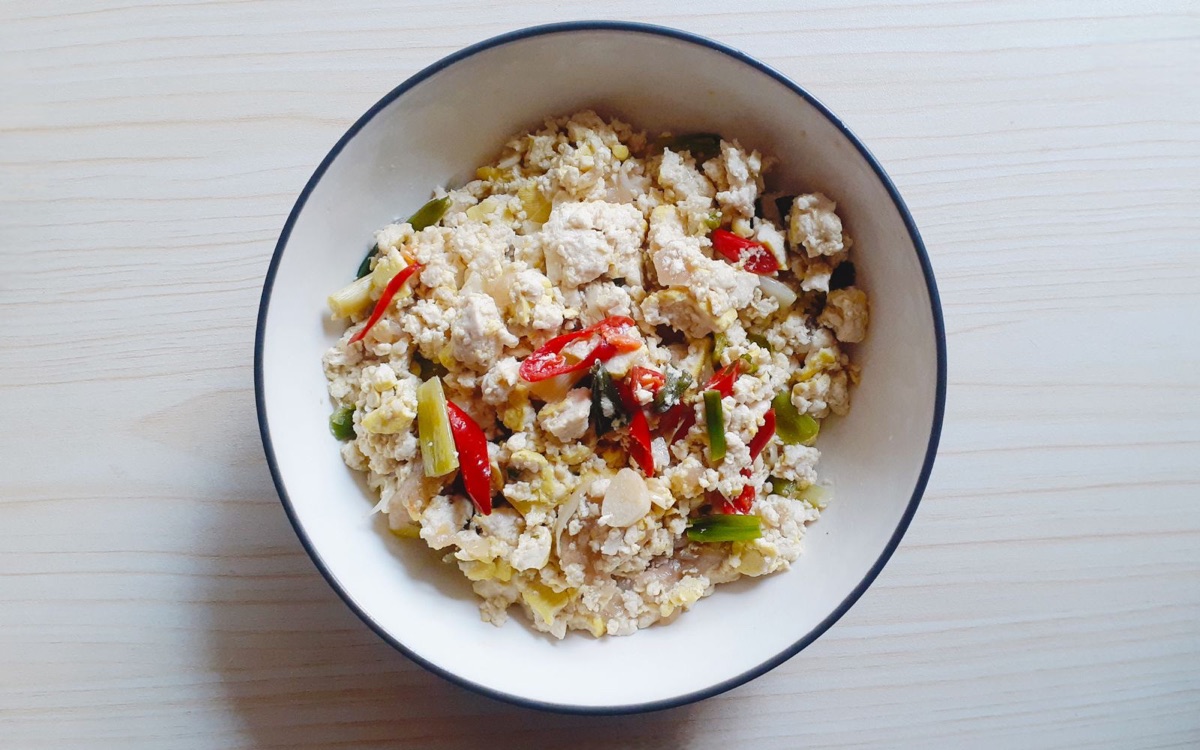
4. Tofu scramble with toast
Use extra-firm tofu as the starting point for a savory breakfast, with vegetables and seasonings you enjoy. Follow the product's preparation directions. Measure the reference portion before pressing and cooking so the weight matches the calculation basis.
This offers a plant-based option. Check the bread and other ingredients if you want the entire meal to be vegan. Silken tofu and different extra-firm products can have different protein concentrations, so a swap needs a fresh calculation.
5. Yogurt overnight oats
For a breakfast you prepare ahead, combine the measured oats, yogurt and soy beverage using a suitable overnight-oats preparation method. Follow package directions and keep the mixture refrigerated. Fruit or cinnamon can change the flavor without requiring a new routine.
This idea uses soy beverage alongside dairy yogurt; it is not dairy-free. A version made entirely with plant-based products needs a different calculation. This combination has not been kitchen-tested by NutriEstilo, so adjust the texture to your preference rather than expecting an exact recipe result.
6. An egg-and-bean breakfast bowl
Combine cooked eggs and prepared black beans in a bowl. Add vegetables or salsa if you like. A tortilla is another serving option, but its protein is not included in the table.
The bean estimate uses 130 g as packaged, including the product's liquid. Draining, rinsing or replacing it with a different bean product changes the basis of the estimate. Use your own label for the version you actually prepare.
7. A savory chicken and rice bowl
If you enjoy savory food in the morning, chicken and rice can be breakfast too. Add vegetables that fit your preferences and follow the preparation instructions for each ingredient.
For a reproducible reference, the table uses fully cooked fajita chicken strips and ready-cooked brown rice. Home-cooked leftover chicken is another possibility, but its protein estimate needs a matching cooked-food reference; do not apply the packaged chicken value automatically. Seasoned products also vary in sodium and ingredients.
Plan a few breakfasts you will actually use
Choose two ideas before buying ingredients for all seven. You might keep one option for mornings at home and another for busier days. Look at the amount you will use before the food needs to be eaten or frozen; a large package is only convenient if it fits your routine.
For food safety, keep the refrigerator at 40°F/4°C or below. FoodSafety.gov lists 3–4 days for refrigerated cooked meat or poultry leftovers. Reheat leftovers to 165°F/74°C, checked with a food thermometer. Follow product-specific instructions and use appropriate storage for other foods rather than applying one shelf life to every breakfast. Cold storage chart and cooking temperature chart.
Adapt the meal to your needs
Dairy, eggs, soy and wheat appear in several examples. Check the actual ingredient and allergen labels, and choose alternatives appropriate for you. Substitutions may change protein, calcium, fiber and other nutrients.
These breakfast examples do not establish how much protein you personally need. If you have kidney disease or have been given nutrition restrictions, discuss changes with your healthcare team. NIDDK describes how protein needs can differ with kidney disease and treatment. NIDDK kidney nutrition guidance
Food references used in the calculations
- FAGE Total 0%: the U.S. 170 g serving lists 18 g protein. The smaller 150 g pot has a different amount.
- Quaker Old Fashioned Oats label displayed by Kroger: 40 g dry oats lists 5 g protein.
- American Egg Board: approximately 6 g protein per large egg.
- Dave's Killer Bread nutrition table: regular 21 Whole Grains and Seeds, 45 g slice, lists 6 g protein. Thin-sliced bread differs.
- Daisy cottage cheese: the 2% tub's label lists 13 g protein per 113 g.
- Nasoya extra-firm tofu: the linked nutrition label lists 9 g protein per 85 g.
- Silk Unsweet Soymilk: 240 mL lists 8 g protein.
- Bush's low-sodium black beans product sheet: 130 g lists 7 g protein; match your current package.
- Tyson fully cooked fajita chicken strips: 84 g lists 21 g protein.
- Ben's Original ready-cooked brown rice: 140 g lists 4 g protein.
Common questions
Do I need protein powder for these breakfasts?
None of these examples requires protein powder. They use ordinary foods with amounts you can check on labels.
Does everyone over 40 need the same breakfast protein amount?
No personal target is set here. These are examples to help you understand food combinations and label arithmetic.
Can I use a less expensive brand?
Yes. The named products make the calculation traceable. Use the label on your preferred product and adjust for the portion you use.
Are these tested recipes?
They are meal ideas with estimated protein subtotals. NutriEstilo has not tested their cooking times, texture or full nutrient composition.
For more cooking inspiration, browse our recipes and Nutrition & Wellness articles.